What’s in Season, what’s out?
Passing the equinox is a turning point for growers. The days are getting longer, the sun climbs higher in the sky, its light stronger and more energising, causing winter produce like kale to flower signalling that their season is ending. At the same time, summer crops like broad beans and sugar snap peas are breaking through the soil and climbing towards the light.
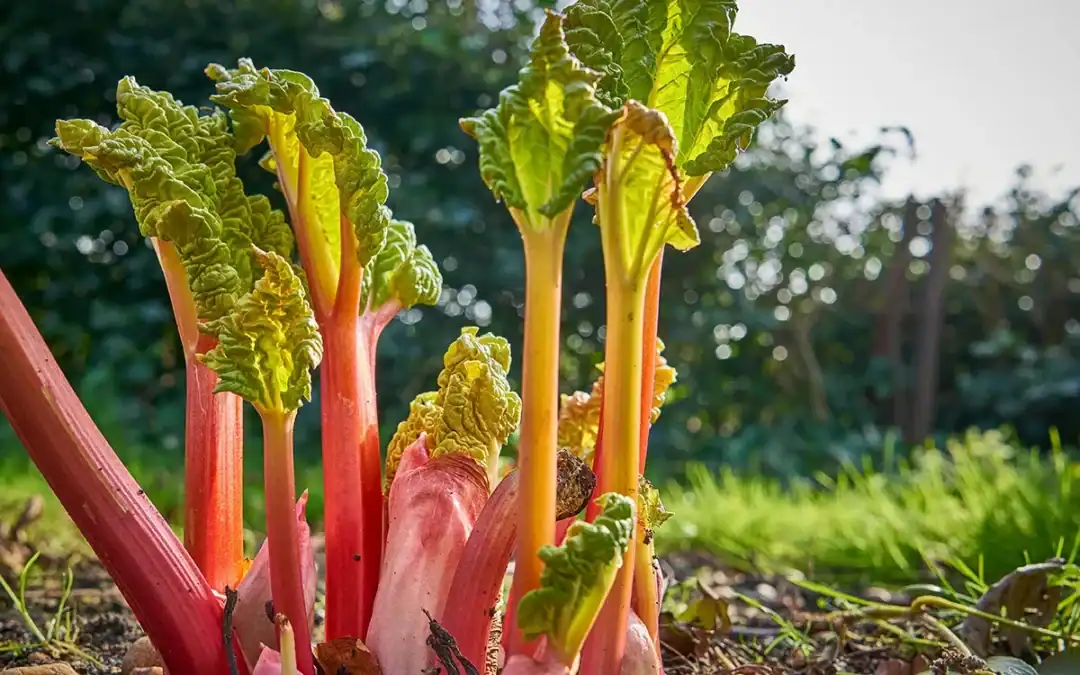
A telltale sign that spring has sprung is the arrival of forced rhubarb and wild garlic in your veg bags. Both are very distinctive. Forced rhubarb is grown in the dark, which encourages it to stretch out tender, sweet, pink stems. While wild garlic is completely untameable, and can only be foraged in woodland environments. Its sharp, vibrant flavour makes it perfect for things like pesto.
Yet while these delights emerge, winter’s stores are quietly dwindling. The heavy, starchy crops of winter gradually make way for lighter, fresher greens like chard, cabbage, salad leaves, rocket, and spring greens. These early-season greens remind us that the year’s growing cycle is turning, and there’s more variety and brightness to come.
Can’t Be Tamed
Wild garlic is one of those truly seasonal treats that perfectly encapsulates what Vegbox is all about. It appears for just a short window each year, growing wild in woodlands rather than neat rows, and stubbornly resists being tamed by supermarkets. You won’t find it neatly packaged year-round, it simply doesn’t fit that system.
Our wild garlic comes from Martin at Ripple Organic Farm. Martin has a neighbour Hilary, at Burscombe Cliff Farm. Hilary is a livestock farmer who happens to have wild garlic growing naturally in her woodland.. Martin has a lovely symbiotic arrangement with her, that in exchange for surplus vegetables for her livestock, he is able to jump the fence and harvest the wild garlic each spring.
So now when wild garlic appears in your veg bag, remember it is more than just another leafy green. It’s a sign of the season turning, a product of cooperation rather than competition, and a reminder that some of the best food comes from working with nature, not trying to control it.

A Goodbye Treat
At this time of year, some of the crops we’ve relied on all winter begin to change. Kale, sprouts, and kalettes start to stretch upwards, sending out delicate yellow flowers. For growers, this is known as “bolting,” and it usually marks the end of a crop’s harvest window. The plant shifts its energy away from producing the leaves we eat and towards reproduction, following its natural instinct to flower and go to seed.
It’s easy to see this as the end of the crop, but it’s also the beginning of something else, that is often overlooked and unknown. Those flowering tops are entirely edible. Tender, slightly sweet, with a flavour somewhere between broccoli and cabbage, they’re one of the quieter seasonal treats of early spring. In many ways, eating it like this is closer to the plant’s wild origins than the carefully selected forms we usually harvest.
They’re fleeting, delicate, and deeply seasonal. Rather than being planted or planned, they appear as a natural second life of the crop, something you only get if you allow the plant to complete its cycle. We sometimes include them in stir-fry mixes, where their flavour is mild and fresh.

Friend or Foe
In traditional farming, all weeds are seen as parasites to be destroyed with chemicals. Then more chemicals are sprayed on to replenish the soil’s nutrients. But some ‘weeds’ protect the soil, if only we’d let them. Speedwell is one of these naturally occurring, fast growing plants that straddles the line between nuisance and ally.
Speedwell is a low-growing, creeping plant that quietly establishes itself on bare ground once the vegetables have been harvested. Its presence keeps the soil covered through the long winter months and prevents valuable nutrients from leaching away when it rains. What stops it from becoming a problem is its shallow root system, meaning it’s easily managed and doesn’t compete with crops when the growing season begins again.
Now, with a few warm, sunny days, Speedwell is putting on a delicate show of sky-blue and white flowers. It’s a reminder that even the plants we sometimes overlook have their place in supporting the ecosystem, and can add a touch of beauty to the fields before the new season of crops bursts forth.

Thanks for Reading
Eating with the seasons and supporting sustainable farms is one of the simplest ways to be part of changing our food system: it champions environmentally responsible farming, cuts down food miles, supports UK farmers, and ensures your fruit and veg are at their peak flavour and freshness.
From storms to pests to the pressures of a changing climate, our farmers tackle it all. By sharing their stories, this newsletter brings you closer to the land, the natural rhythms of the seasons and what it takes to put food on our plates.
Each edition offers simple guidance on what’s in season, stories from the farms we work with, and a window into the world of organic and regenerative agriculture.
This newsletter grew out of our work running Kentish Town Vegbox, a community-owned, not-for-profit veg scheme connecting North Londoners with small UK farms since 2012. Every week we see the beauty and the challenges of seasonal farming up close, and we wanted to create a space to share those stories with you.
We hope this newsletter helps you feel more grounded in the seasons, more connected to the farmers who grow your food, and more inspired by the incredible work happening on UK farms.
See you in your inbox soon,
Caleb & The Vegbox Team